
Python Programming for Kids: A Guide for Parents and Teachers
In today’s fast-moving digital world, python programming for kids is no longer just an extracurricular activity, it’s a gateway to developing logical thinking, creativity, and problem-solving skills that will prepare children for the jobs of tomorrow. Parents who want their children to excel in a technology-driven future understand the importance of python coding for kids.
This guide will show you how a Python for kids course can transform screen time into meaningful learning and future-ready skills.
Why Python Is the Perfect Language for Teaching Kids Programming
When choosing a “coding for kids python” path, it’s essential to pick a language that doesn’t frighten your child but invites them in. That’s exactly why “python programming for kids” works so well—it lowers the barrier to entry, aligns with real‑life tech, and offers a world of friendly community. Below we dive into three major reasons why a “python for kids course” is an excellent starting point for young learners.
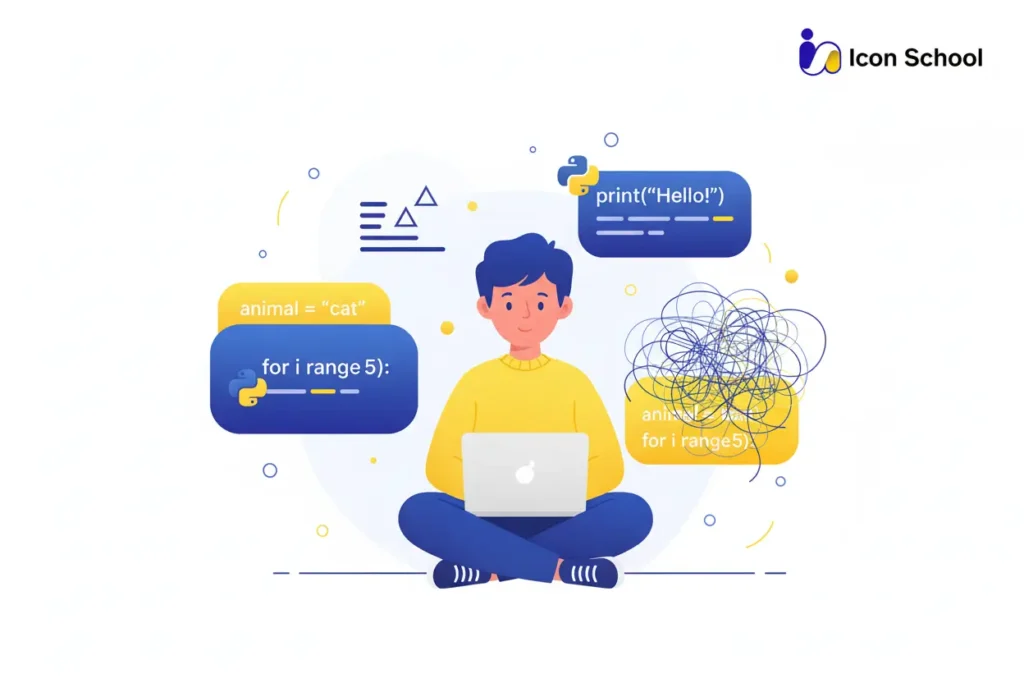
Simplicity of Syntax and Easy Readability
Python stands out as a beginner‑friendly language because:
- Its syntax closely resembles plain English and is far less cluttered than many languages. According to GeeksforGeeks, Python’s kid‑friendly syntax allows young learners to grasp programming concepts without being overwhelmed.
- It offers immediate feedback and easy setup. As noted by ModernAgeCoders, kids can write something like print(Hello, world) and see results instantly, which keeps enthusiasm high.
- The learning curve is gentle. The blog from iT Learner emphasizes that Python for primary‑school kids is ideal because the language allows stepping from simple statements to loops and functions gradually.
- For parents looking at “python coding for kids,” this means less worry about syntax complexity and more time for creativity and growth rather than frustration. The simplicity makes it possible to engage children aged 8+ with real code, not just drag‑and‑drop blocks, enabling “kids python programming” to become meaningful fast.
Python’s Real‑World Applications
Teaching your child via a “python for kids course” is not just about learning code, it’s equipping them for the modern digital world:
- Python is widely used in web development, data science, artificial intelligence, robotics, and more. As Feast Magazine states, when children learn Python, they are getting a head‑start in fields that matter.
- Unlike languages used only for beginner courses, Python scales: your child’s early code experiments could evolve into genuine applications, games, or automation projects.
- This real‑world relevance means your investment in “python programming for kids” brings returns: skills that transfer to STEM subjects, future jobs, and digital reasoning.
- Kids become not just users of technology but creators building games, scripts, or interactive stories. This changes their relationship with screens from passive to active.
Supportive Community and Abundant Resources
One of the greatest advantages of choosing a “python for kids course” is the ecosystem around it:
- Python enjoys one of the largest and most active programming communities, which means plentiful tutorials, forums, peer‑projects, and help for kids. According to a Medium article, strong community support is key for young coders’ motivation.
- Numerous resources have been tailored for children: kid‑friendly libraries like Turtle Graphics, easy-to-use platforms, visual feedback mechanisms that iT Learner highlights this in their 2025 piece.
- This abundance of support reduces the risk of a child getting stuck and quitting. That’s a big concern for many parents when beginning “kids python programming.”
- The availability of interactive tools means children stay engaged. CodeEarly Club’s review mentions how kids gain confidence by building projects, debugging together, and celebrating results.
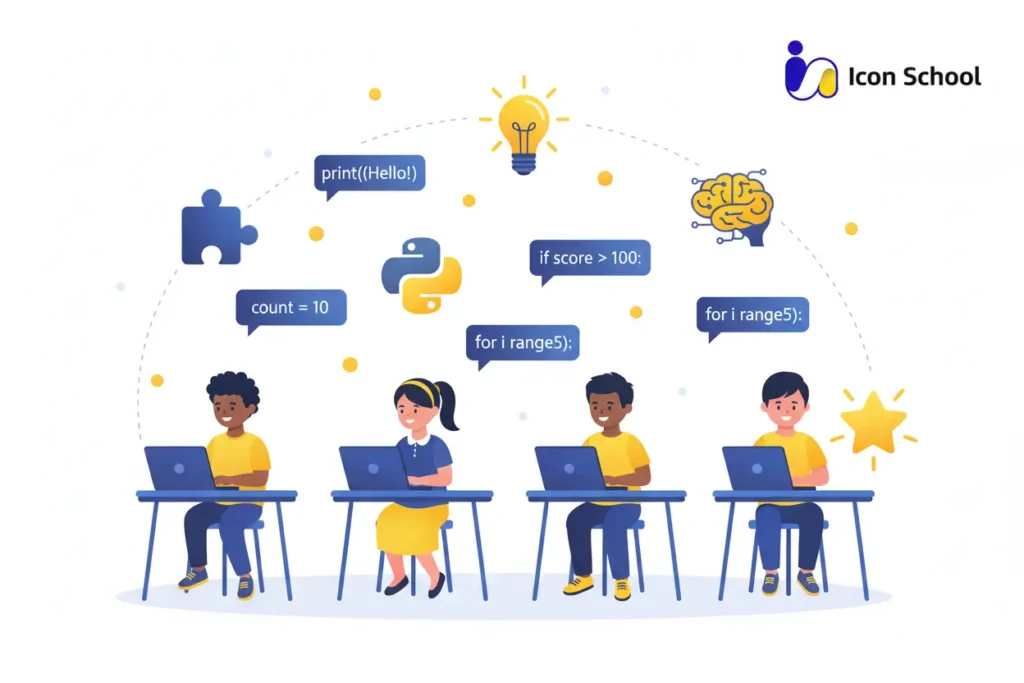
Educational and Skill Benefits from Kids Learning Python
When you decide to introduce your child to python programming for kids, you’re making a decision far beyond just “learning to code.” You’re laying the foundation for logical thought, creative expression, and self‑confidence.
In the challenging world of screens, apps, and rapid technological change, a python for kids course can turn your child from a passive consumer into an active creator with skills that matter in school today and in careers tomorrow.
Developing Logical and Computational Thinking
In python coding for kids, your child learns not just syntax, but how to think: how to break down problems, create sequences of instructions, test results, and refine their approach.
- They begin by understanding that computers follow specific rules and sequences. Writing even a simple loop or conditional in Python teaches them to structure their thoughts. Studies highlight that coding significantly improves computational thinking, motivation, and attitudes in primary school learners.
- By working through mini-algorithms, children train their minds to view problems as composed of smaller tasks valuable not only in coding but in mathematics and science.
- As they debug code, they develop a habit of reflecting on their decisions, a form of metacognition that improves their learning ability across subjects.
- For Egyptian parents, choosing a python for kids course means your child is practicing a modern form of thinking, not just memorising schoolwork. Over time, this kind of thinking becomes second nature: decompose → sequence → execute → evaluate. These are the steps your child will replicate in real-life projects, exams, and later, in technological careers.
Enhancing Problem-Solving and Creativity Skills
Introducing your child to python programming for kids gives them both a tool and a canvas: a tool to tackle problems, and a canvas to express ideas.
- With Python, children don’t just follow instructions, they create them. They design games, animations, or apps, turning imagination into reality. According to a recent article, coding nurtures creative thinkers who design rather than just consume.
- Problem-solving becomes fun: when a script fails or doesn’t give the expected result, your child learns to debug, re-test, and persist skills central to success beyond coding. Coding builds resilience and an understanding that failure is part of success.
- As children combine logic with creativity, perhaps creating a game that uses loops, graphics, or sound, they gain joy in creation and ownership of work. That sense of ownership is critical in moving from “I used a screen” to “I built this screen”.
- Instead of just playing games, they make them. Instead of just watching videos, they code them. This shift alters how they see themselves: from consumer to creator.
Building Self‑Confidence and Independence
One of the hidden but powerful benefits of a strong python for kids course is how it builds your child’s self‑belief and independence.
- When children write code and see immediate feedback“My code worked”,they gain concrete evidence of success. That boosts self-esteem in a way few other activities do. Research shows that programming supports not just cognitive but also socio-emotional skills like self-confidence.
- As they progress from simple tasks to more complex ones, they realize their capacity to learn and overcome. They stop asking “Can I?” and start saying “I will” This shift to autonomous learning is a major step in independence.
- They begin to manage their own projects: planning, executing, and polishing. This gives them a sense of ownership and personal responsibility traits that matter in school, hobbies, and later in the workplace.
- For you as a parent, this means that when your child works through a coding for kids python course, they are not just gaining technical skills; they’re gaining confidence that they can learn, adapt, and create. Over time, this independence spills into other areas: homework, learning new subjects, and even deciding how they spend their digital time.
- Introducing your child to python programming for kids begins with grasping the fundamental concepts that form the building blocks of coding. A solid foundation ensures they can progress confidently from simple exercises to creating their own games, apps, or projects.
- Understanding these basics is essential to make learning Python enjoyable and meaningful. Below, we break down the key concepts every child should learn in a python for kids course.
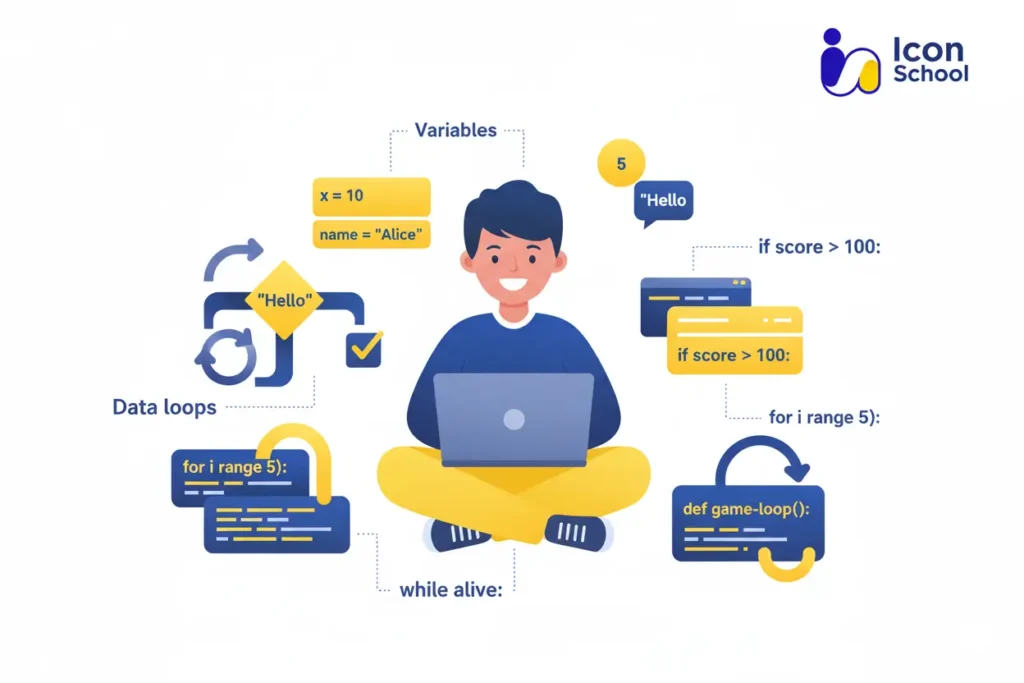
Basic Python Concepts Children Should Learn
Variables and Data Types
Variables are the first step in kids python programming, serving as containers for storing information:
- Teaching children that variables are “names for values” allows them to store numbers, text, or other data types and manipulate them in code.
- Using Python’s simple syntax, kids can assign a number or word to a variable in seconds, e.g., age = 8 or name = “Laila”, making abstract concepts tangible.
- Exposing children to different data types, integers, strings, floats teaches them how to handle various forms of information, which is fundamental to logical thinking and problem-solving.
- Hands-on exercises like storing scores in a game or a list of favorite colors help children understand the practical purpose of variables.
- Variables and data types form the backbone for more advanced Python structures, such as lists, dictionaries, and objects later in their coding journey.
Conditional Statements and Decision Making
Conditional statements enable children to make their programs “think” and respond to different situations:
- Python’s if, elif, and else statements allow kids to make decisions in their programs: “If this happens, do that.”
- They can apply conditions in games, quizzes, or story-based programs, e.g., checking if a score exceeds a certain number or if a character reaches a specific position.
- This teaches children not only coding logic but also the concept of cause and effect, which strengthens reasoning skills.
- Practicing decision-making with conditional statements helps children anticipate multiple outcomes and plan their code structure carefully.
- Mastering conditions early prepares children for complex logic structures in larger projects and real-world applications.
Loops and Task Automation
Loops teach children to repeat tasks efficiently and automate processes, which is a core skill in programming:
- For example, a for loop can help print a series of numbers, repeat a set of instructions, or animate a character in a game.
- Loops reduce repetitive coding and show children the power of automation, teaching them to think about efficiency and optimization.
- By experimenting with loops, children understand patterns, sequences, and repetition concepts essential in both programming and real-life problem solving.
- Engaging exercises like drawing shapes with Turtle Graphics or animating a sprite in a game make loops visually rewarding and intuitive.
- Mastery of loops lays the groundwork for more advanced concepts, such as nested loops and iteration over data structures.
Functions: Building Program Blocks
Functions allow children to organize code into reusable blocks, enhancing clarity and problem-solving skills:
- Python functions, defined with def, teach children how to group instructions that can be called multiple times.
- Children can create a function to handle a specific task, like calculating points in a game or displaying a message, which reduces errors and improves structure.
- Functions help kids understand modular programming, a critical concept in software development by breaking problems into smaller, manageable pieces.
- Practicing functions strengthens logical thinking, planning, and debugging skills, as children learn to predict outcomes and test each module independently.
- Using functions early also encourages creativity, as kids can combine multiple functions to create complex programs, games, or interactive stories.
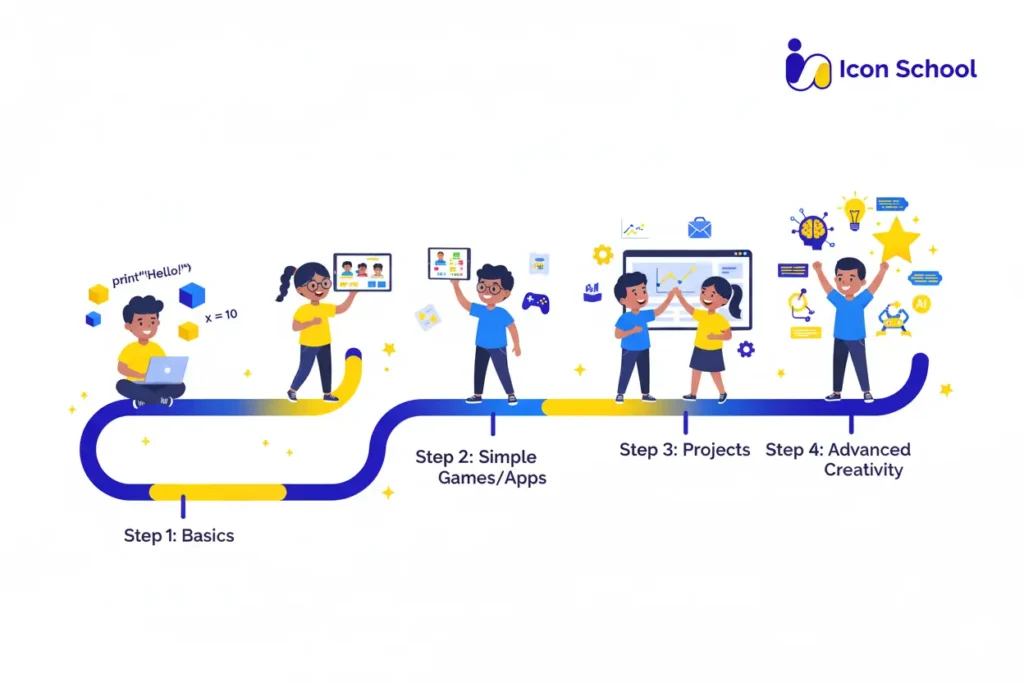
The Ideal Educational Path for Kids Learning Python
Choosing the right python programming for kids path is crucial to ensure steady progress, confidence, and long-term engagement. A structured approach allows children to build skills gradually, avoid frustration, and experience the joy of creating real projects.
Below, we outline an ideal educational path for children learning Python, broken into three progressive stages tailored to different age groups.
Stage One: Introduction to Programming (Age Group 7-9 Years)
The first stage introduces children to python coding for kids in a playful and engaging way. At this age, learning should focus on exploration and basic concepts:
- Using visual and interactive platforms, children start with simple code snippets, like printing messages, basic calculations, or drawing with Turtle Graphics.
- Emphasis is on variables, data types, and very simple conditional statements to build early computational thinking.
- Small games and interactive exercises make learning tangible and fun, transforming curiosity into early coding skills.
- At this stage, children gain confidence as they see immediate results from their code, reinforcing logical thinking and experimentation.
- The goal is to develop a positive relationship with programming and inspire them to continue learning in the next stage.
Stage Two: Building Strong Foundations (Age Group 10-12 Years)
In stage two, children deepen their understanding of python for kids course concepts and begin applying them to more structured tasks:
- Core topics include loops, functions, and more complex conditional logic, allowing children to automate repetitive tasks and organize their code efficiently.
- Projects become more ambitious: creating quizzes, small games, or interactive stories that combine logic, creativity, and problem-solving.
- Children learn debugging and error-handling, cultivating persistence and resilience.
- The focus is on strengthening computational thinking while gradually introducing real-world applications of Python, showing children how their skills connect to broader technology use.
- By the end of this stage, children are capable of completing multi-step projects independently and enjoy seeing tangible results from their efforts.
Stage Three: Advanced Projects and Creativity (Age Group 13-16 Years)
The final stage focuses on creative, practical, and advanced Python applications, allowing children to fully realize their coding potential:
- Students work on game development, data projects, and beginner-level AI or automation scripts, applying all concepts learned in earlier stages.
- Encouragement of independent problem-solving and innovation helps children develop a sense of ownership and confidence in their abilities.
- Projects may include text-based adventures, interactive apps, or integration of multiple libraries for creative outputs.
- This stage also introduces collaboration: kids can work in teams or participate in coding competitions, building social skills and learning from peers.
- By the end of this stage, children are ready to transition from guided learning to self-directed projects, preparing them for more advanced programming courses or real-world tech challenges.
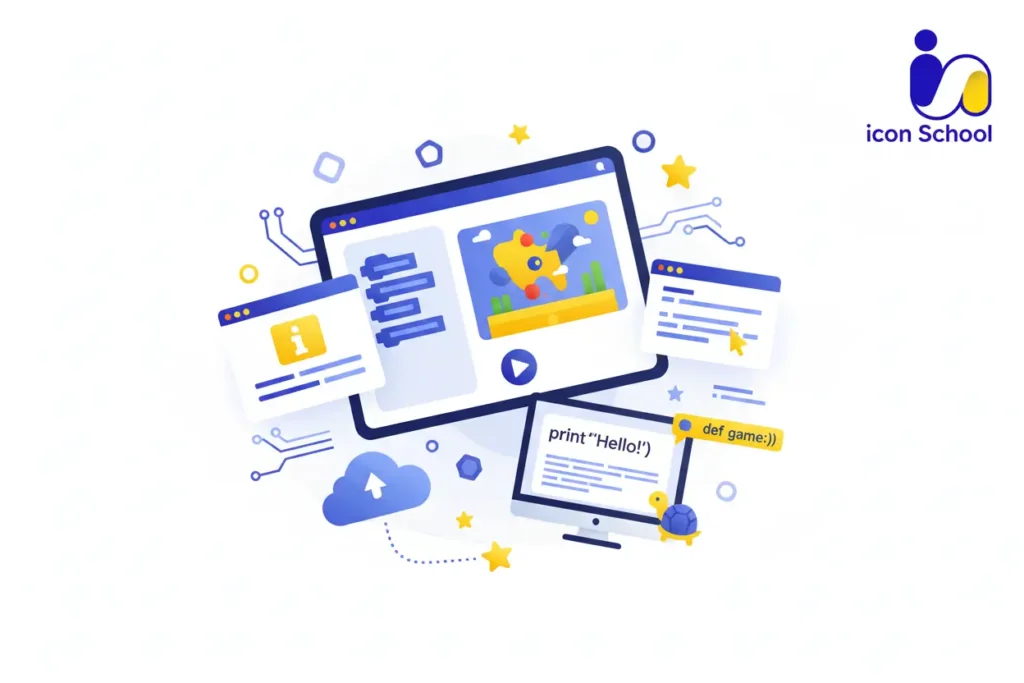
Effective Tools and Platforms for Learning Python
Choosing the right tools and platforms is essential for making python programming for kids both engaging and effective. The right environment ensures that children can focus on learning concepts, experimenting, and creating projects without frustration.
Below, we explore programming environments and Python libraries specifically designed to make coding accessible and enjoyable for young learners.
Programming Environments Suitable for Kids
The coding environment plays a crucial role in python coding for kids, helping them interact with Python in a friendly and safe space:
- Thonny: Ideal for beginners, Thonny offers a simple interface with step-by-step debugging that helps children understand how their code executes.
- Mu Editor: Designed for learners, Mu Editor simplifies Python syntax display and supports instant feedback, which keeps young coders motivated.
- Repl.it: An online platform enabling kids to code without installation, offering interactive Python lessons and project sharing with peers.
Python Libraries Designed for Learning
Python libraries tailored for children enhance engagement and provide practical experiences in coding:
- Turtle Graphics: Introduces coding visually through drawing, helping children understand loops, functions, and coordinates.
- Pygame: Enables kids to develop simple games, combining logic, creativity, and problem-solving in a fun environment.
- PictoBlox: Provides a block-based interface with Python coding integration, easing the transition from visual to text-based coding.
Practical Tips for Parents and Teachers to Support Children’s Learning Journey
Supporting your child’s journey in python programming for kids goes beyond enrolling them in a course. Parents and teachers play a vital role in keeping children motivated, confident, and curious. By providing guidance, encouragement, and structure, you can turn coding into a rewarding experience that develops both skills and mindset.
Below, we explore practical strategies to maximize learning outcomes in a python for kids course.
Creating a Stimulating and Encouraging Learning Environment
A positive and engaging environment is key to fostering interest in python coding for kids:
- Set up a dedicated workspace free from distractions, with a reliable computer and access to coding platforms like Thonny or Repl.it.
- Encourage exploration rather than perfection. Celebrate effort and curiosity, reinforcing that mistakes are part of learning.
- Incorporate visual and interactive elements such as colorful charts, coding games, or hands-on exercises to maintain engagement.
- Offer guidance rather than solutions allow children to attempt challenges independently, boosting problem-solving skills and confidence.
Using Projects to Enhance Learning
Practical projects make kids python programming relevant and fun:
- Start with small, achievable projects such as a calculator, a simple game, or an interactive story. This demonstrates the connection between coding and real-world outcomes.
- Encourage children to add personal touches to projects custom graphics, sounds, or storylines, which fosters creativity alongside technical skills.
- Gradually increase project complexity as confidence grows: combining loops, conditionals, and functions to create more advanced games or applications.
- Regularly review and discuss projects together, highlighting successes and areas for improvement, which strengthens analytical thinking and reflection.
Dealing with Challenges and Frustration
Challenges and frustration are natural in the learning process, especially in coding:
- Normalize mistakes: teach children that errors are opportunities to debug and learn rather than signs of failure.
- Break problems into smaller, manageable steps. This approach makes complex tasks less intimidating and builds resilience.
- Offer encouragement and celebrate small wins to maintain motivation and prevent discouragement.
- Encourage collaboration with peers or online coding communities to provide support and inspiration.
- Maintain patience and consistent engagement; your attitude toward challenges strongly influences your child’s persistence and confidence.
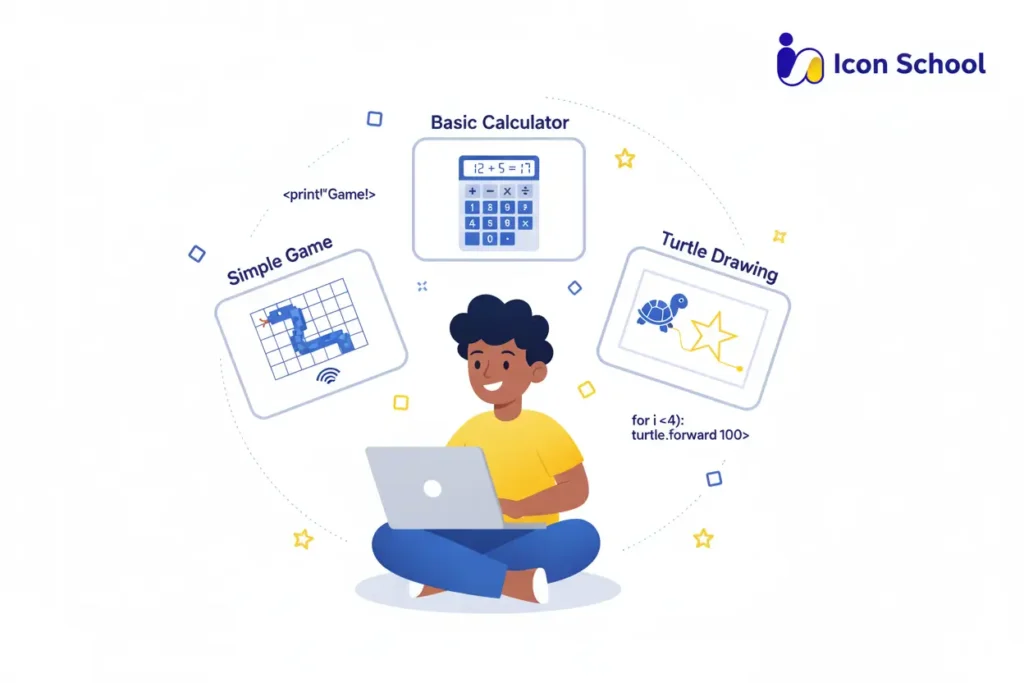
Examples of Inspiring Python Projects for Kids
Hands-on projects are the heart of python programming for kids, turning theory into tangible results. By building small but meaningful applications, children gain confidence, practice problem-solving, and experience the joy of creation.
Below, we highlight three inspiring project ideas suitable for beginners and intermediate learners in a python for kids course.
Snake Game
Creating a Snake Game is a classic and motivating project for children learning python coding for kids:
- Kids apply concepts like loops, conditional statements, and variables to control the snake’s movement and track scores.
- Implementing collision detection and game-over logic introduces basic problem-solving and debugging practice.
- Adding personal features, such as custom graphics, colors, or sounds, encourages creativity and ownership of the project.
- Completing the game gives a sense of achievement, showing children how logical thinking translates into fun, interactive outcomes.
Interactive Calculator
An Interactive Calculator project helps children see immediate results from their code while practicing essential Python skills:
- Kids learn to handle input and output, arithmetic operations, and basic functions. (itlearner.com)
- They understand decision-making by implementing checks for valid inputs or operation types.
- By designing a user-friendly interface, children explore how programming can solve real-life problems, reinforcing the connection between coding and daily applications.
- This project is simple yet highly rewarding, allowing children to test, debug, and improve their code iteratively, boosting confidence in their abilities.
Artistic Drawing Program Using Turtle
Using Python’s Turtle Graphics, children can create their own artistic programs:
- Kids learn to combine loops, functions, and variables to draw shapes, patterns, and even animations.
- This project encourages experimentation and creative thinking as children choose colors, shapes, and design sequences.
- Turtle Graphics offers visual feedback, which makes abstract coding concepts more concrete and enjoyable.
- Children develop both programming and artistic skills, demonstrating that coding can be both logical and expressive.
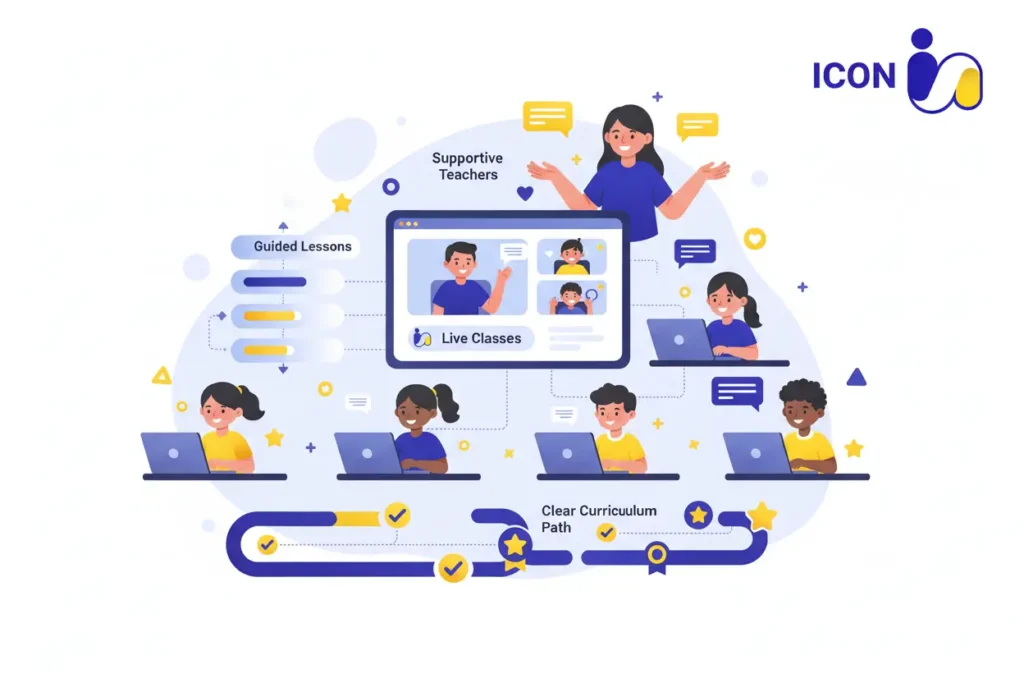
How Icon School Helps Your Children Master Python
In today’s digital era, giving your child the right start in python programming for kids can shape their thinking, creativity, and future career opportunities. Icon School provides a structured, supportive, and interactive learning path that ensures children not only learn Python but gain confidence, problem-solving skills, and a love for coding.
Through a combination of expert guidance, engaging content, and hands-on projects, Icon School transforms screen time into meaningful learning.
Progressive Educational Curriculum Designed Specifically for Kids
Icon School’s python for kids course follows a carefully structured curriculum that grows with your child’s abilities:
- The program begins with foundational concepts like variables, loops, and conditionals, making Python accessible even to young beginners aged 7-9.
- Children progress to intermediate topics, including functions, text-based projects, and mini-games, solidifying their understanding of programming logic and computational thinking.
- Advanced stages allow children to create independent projects, such as games, calculators, and artistic programs using Turtle Graphics, encouraging creativity and problem-solving.
- The curriculum also emphasizes progressive skill-building, ensuring each stage lays a strong foundation for the next, reducing frustration and keeping children motivated.
Specialized Teachers with Experience in Teaching Children
A key differentiator for Icon School is its team of experienced instructors trained specifically in teaching children:
- Teachers understand the challenges of keeping young learners engaged and know how to explain complex Python concepts in simple, relatable ways.
- Personalized attention ensures that each child progresses at their own pace, addressing individual learning needs and fostering confidence.
- Instructors guide children through hands-on projects, providing tips, feedback, and encouragement to reinforce learning.
- Teachers also coach children on problem-solving strategies and debugging techniques, helping them develop independence and resilience.
Safe and Stimulating Online Learning Environment
Icon School ensures that every child enjoys a secure and interactive online learning environment, designed to maximize focus and engagement:
- The platform offers child-friendly interfaces, easy access to resources, and integrated coding exercises that keep students actively involved.
- Interactive sessions include live coding, quizzes, and challenges that reinforce concepts while making learning enjoyable.
- A safe environment encourages exploration without fear of mistakes, helping children build self-confidence and independence in coding.
- Parental involvement is also supported, with progress reports and guidance on how to help children practice and apply their skills at home.
Frequently Asked Questions About Kids Learning Python
What is the appropriate age to start learning Python?
Children can begin exploring programming concepts with visual tools from ages 7-9, and transition to actual Python coding around 10-12 years, making it accessible for young learners without prior experience.
Does my child need a prior programming background?
No prior background is needed. Python’s simple syntax and readability make it perfect for beginners, allowing children to start coding from scratch confidently.
How much time does a child need to become proficient in Python?
While learning is a continuous journey, children can build simple projects, games, or apps within a few weeks, gaining practical skills and confidence early.
Does learning programming affect a child’s academic performance?
On the contrary, learning Python strengthens logical thinking, problem-solving, and creativity, which positively supports performance across subjects like math and science.
How can I encourage my child to continue learning?
Look for signs of progress and enjoyment: enthusiasm for coding, eagerness to share projects, asking questions, and perseverance when solving challenges.
Equipping your child with python programming skills is more than learning to code, it’s preparing them for a future of creativity, problem-solving, and digital confidence. The earlier they start, the stronger their foundation for future innovation and opportunities. Don’t wait to give your child this advantage that Icon School provides structured python for kids courses and progressive learning paths designed to make coding engaging, effective, and inspiring to start their journey today.