
Programming for Kids in Arabic: A Simple Learning Guide
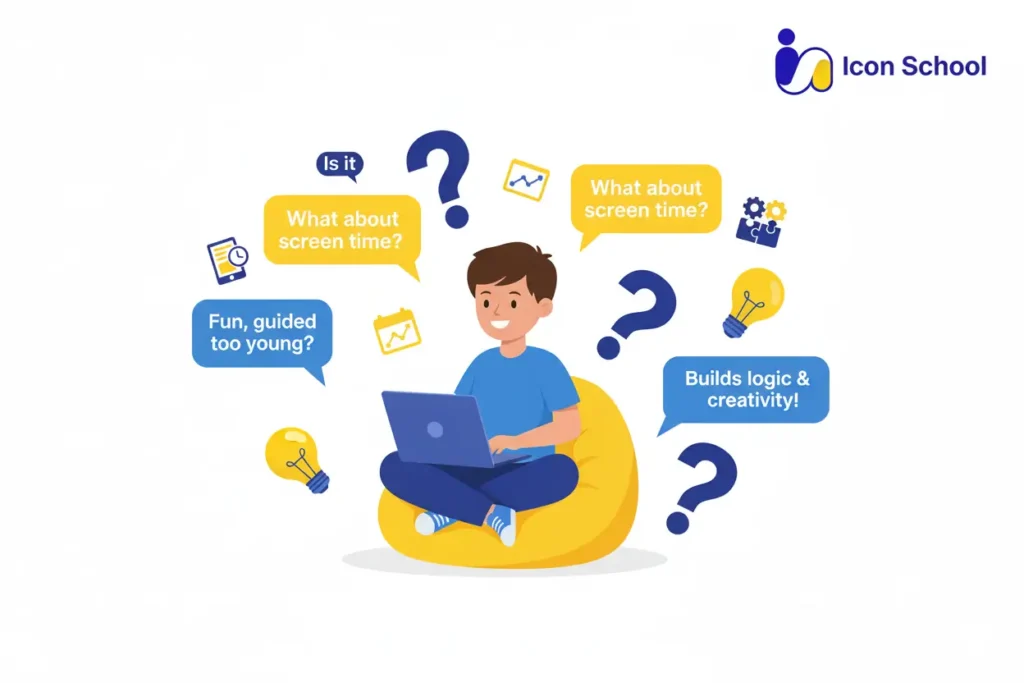
In today’s digital world, screens dominate childhood. Hours of swiping and tapping often replace creativity with passive consumption. Parents watch with concern, feeling the tension between curiosity and wasted potential.
Programming for kids in Arabic transforms this scenario, turning idle screen time into a playground for innovation, logical thinking, and problem-solving. This guide will lead you step by step, showing how your child can learn, create, and thrive in the digital age.
Why Programming for Kids in Arabic Is Important for Their Future
In an era where technology evolves at lightning speed, equipping your child with the ability to not only consume but to create becomes a necessity. Learning programming for kids in Arabic empowers young learners to navigate a digital world with confidence and purpose.
By mastering coding basics in their native language, children build foundational skills that will serve them academically, socially, and professionally for years to come.
Developing Logical Thinking and Problem Solving Skills
When you invest in programming for kids in Arabic, you’re giving them tools to deconstruct complex problems, evaluate possible solutions, and implement them step by step. Consider the following key benefits:
- Immediate feedback loop: Coding platforms allow children to test ideas, see what works or fails, and adjust accordingly, strengthening logical thinking.
- Systematic decomposition: Kids learn how to break down large tasks into smaller parts and sequence them, critical for problem solving.
- Pattern recognition: Identifying patterns in code translates into strong analytical skills, useful across subjects.
- Error handling resilience: Encountering bugs teaches perseverance and encourages iterative thinking (I failed, now I fix and try again).
- Transfer across domains: Skills developed via coding logical reasoning, abstraction apply to mathematics, science, and even reading comprehension.
- Structured thinking under time constraints: Many coding tools for kids employ gamified challenges, fostering decision making under pressure.
- Bridging digital affinity to academic success: Using their interest in devices to engage in programming helps translate screen time into value-adding learning.
Enhancing Creativity and Self Expression Through Interactive Projects
Offering your child to learn programming for Arabic kids opens doors not just to logic but to artistry:
- Create, not just consume: Instead of using apps, children design their own games, animations, or apps, shifting roles from user to creator.
- Tailor to individual interests: Whether it’s music, drawing, storytelling, or designing, coding allows children to incorporate personal passions into projects.
- Interactive feedback enhances engagement: When kids see the result of their code instantly, like a sprite moving, they feel empowered and stay motivated.
- Collaborative creativity: Many programming platforms for kids encourage sharing, remixing, and collaborating, boosting communication and social skills.
- Cross-discipline expression: From art and design to logic and math, programming merges disciplines and fosters holistic, innovative thinking.
- Ownership of learning: Designing a project end to end gives children a sense of autonomy and pride, fueling a growth mindset.
- Future-facing creative toolkit: As technology evolves, creativity expressed through code gives children a competitive edge in both STEM and non-STEM fields.
Preparing Children for Future Opportunities in the Digital Job Market
With the global demand for programming-literate talent rising, choosing programming for kids in Arabic becomes a strategic decision for future readiness:
- Market expansion: The online coding for kids market is projected to reach USD 5.44 billion in 2025, growing rapidly.
- Technology-driven economies: Children who begin early with code are better prepared for careers that require digital fluency, critical thinking, and creativity.
- Versatility of coding skills: Whether they aim for software development, game design, product management, or entrepreneurship, coding provides a strong technical foundation.
- Global opportunities: Learning programming, and especially in Arabic, positions children for regional and international roles in tech, where bilingual technical talent is prized.
- Adaptability to future jobs: Many future jobs may not yet exist; children fluent in code can pivot into emerging fields with confidence.
- Reduced barrier to entry: Children who start coding young develop familiarity with languages like Scratch, Python, or HTML/CSS, reducing intimidation later.
- Empowerment beyond employment: Even if they choose non-tech careers, programming enhances their ability to leverage technology, giving them a competitive edge.
Best Programming Languages and Platforms for Teaching Kids in Arabic
As a parent in Egypt guiding your child’s digital journey, you’ll want platforms that combine ease, engagement, and Arabic support. Choosing the right tools means your child doesn’t just mimic technology they master and create it.
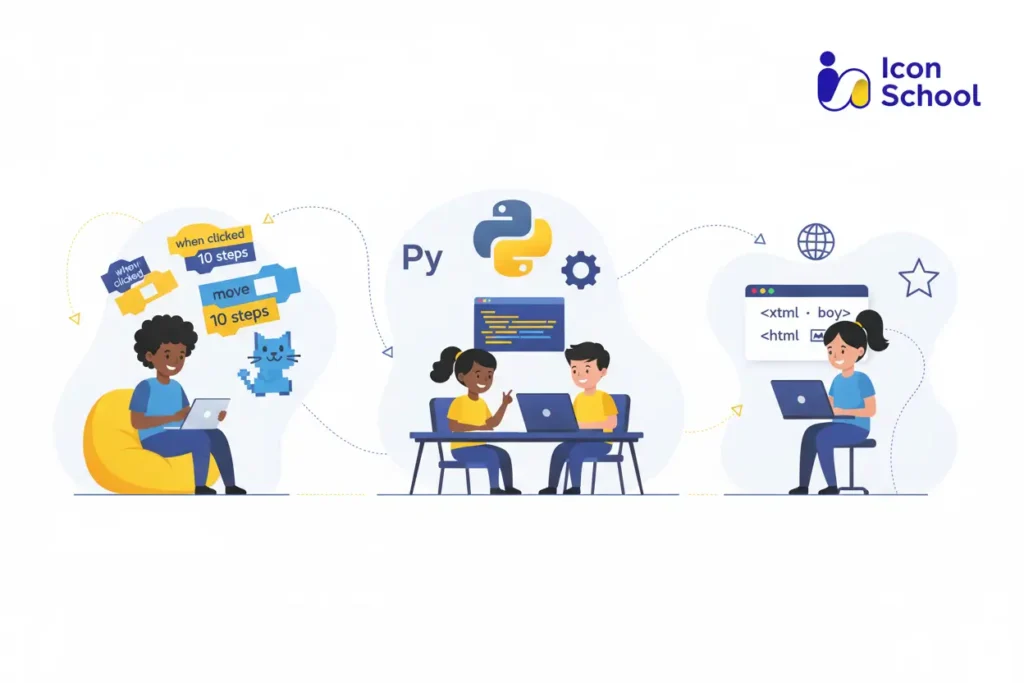
Below are three stacked stages designed for different ages and readiness levels, each with a unique purpose and audience.
Scratch Platform: The First Gateway to the Programming World
For children aged roughly 5 to 10, visual block-based platforms like Scratch offer the perfect introduction to coding in Arabic or bilingual setups. Here’s why:
- An easy drag-and-drop interface makes programming for kids in Arabic accessible right from the start.
- Builds core concepts loops, conditionals, sequences without intimidating syntax.
Instant visual feedback keeps children engaged and motivated. - Encourages creativity: kids design sprites, games, and stories, which promotes technical creativity, not just consumption.
- A safe, widely adopted platform with a global community helpful for kids learning Arabic plus global coding culture.
- Foundations are solid enough to ease the transition into text-based coding later.
- Ideal for bilingual families: though primarily English-based, many resources and curricula have Arabic translations, making it suitable for “learn programming for Arabic kids.”
Python Language: The Leap Toward Professional Programming
Once your child is comfortable and curious (around 10 to 14 years or beyond), moving into a language like Python is a smart and future-oriented decision. Here’s what making this shift offers:
- Python’s simple, readable syntax makes it one of the most accessible text-based languages for youngsters.
- Enables children to write real code, not just blocks, giving them early experience in professional programming.
- Excellent for creating fun projects: games, interactive stories, even robotics via libraries like Turtle or Pygame.
- Builds deeper logical thinking, computational thinking, and transferable academic skills (e.g., math, algorithms).
- Sets a strong foundation for many technology pathways: data science, web back-end, AI making programming for kids in Arabic a stepping stone to real opportunities.
- Encourages confidence: children see their own programs running, leading to pride and self-efficacy.
- Compatible with Arabic-friendly teaching materials and online courses. Thus, the shift from Scratch to Python is logical, structured, and rewarding for your child and you as a parent.
HTML, CSS, and JavaScript: Building Interactive Web Applications
For older children (12+ years) who want tangible outcomes and real-world projects, learning web development with HTML, CSS, and JavaScript is ideal. This stage focuses on “create your own websites and interactive apps” , a compelling next step in programming for kids in Arabic.
- Web development languages let kids see immediate results: a website they build appears online, from structure (HTML) to style (CSS) to behavior (JavaScript).
- Encourages both design and logic: children style their pages (CSS) and add interactivity (JavaScript). This dual path appeals to communicative and logical minds alike.
- Engages with real-world tech: the same languages used for websites today, hence kids’ programming education paths become meaningful.
- Kids gain skills that can be shared immediately: show friends a webpage, share portfolio work that builds motivation and authenticity.
- Many platforms and courses support Arabic interfaces or bilingual teaching, making the transition smoother for learners in Egypt and the Arab world.
- Prepares for front-end careers or hobby projects: if your child loves design, games, or apps, this path is very relevant.
- Builds visibility and confidence: children realize their code has a place on the web, not only in a classroom.
Practical Steps to Start Your Child’s Programming Learning Journey
When you type “programming for kids in Arabic” into your search bar, you’re likely driven by one question: How do I actually begin? For many Egyptian parents, the idea of teaching their child to code can feel overwhelming, with uncertainties about which platform to choose, how much time is needed, or whether the child even has the interest.
The good news, you don’t need to be a tech expert, and the start needn’t be perfect, just structured. Below is a clear four-step roadmap that helps you turn that search into a real, attainable learning journey for your child.
Step One: Assess Your Child’s Interests and Current Level
- Identify unique interests: Has your child shown curiosity in games, drawing, puzzles, or storytelling?. Matching coding projects to those interests transforms “learn programming for Arabic kids” into something they look forward to. For example, a child who loves drawing can begin with a visual tool.
- Evaluate skill readiness: Can they read confidently? Do they enjoy screen time? Younger children (ages 5 to 8) benefit from block-based environments, while older kids (10+) may handle text-based languages.
- Discuss their expectations; Ask: “What would you like to build?” This opens the door to commitment and gives you insight into choosing a path.
- Note attention span and schedule: Realistically choosing a time your child can commit 20 to 30 minutes might be perfect to start.
- Establish a starting mindset: Emphasize that mistakes are normal and learning is the goal not perfection.
Step Two: Choose the Appropriate Platform and Educational Path
- Match the platform to age and interest. For very young children (5-8), block-based tools like Scratch or Blockly are ideal. For older children, consider languages like Python or entry-level web development.
- Check for Arabic or bilingual support: Ensure the tools or curricula offer Arabic interface or guidance so the concept of “programming for kids in Arabic” becomes accessible, not intimidating.
- Ensure progression and structure: Look for a path that goes from simple to advanced—games → apps → websites—to sustain momentum.
- Decide on format: self-paced, tutor-led, or club-based. Each approach has trade-offs: self-paced allows flexibility; instructor-led adds accountability.
- Budget for tools and resources: Some platforms are free; others require a subscription. Set expectations upfront.
- Choose one that supports creativity: The best paths encourage projects children build themselves, not just watch tutorials.
- Community or parent-support aspect: Platforms that allow sharing, feedback, or parent dashboards help sustain engagement.
Step Three: Allocate Regular Time for Learning and Practice
- Define a consistent schedule: For example, every Tuesday and Thursday for 30 minutes regularly builds habits and treats coding as “part of life,” not “another optional activity.”
- Break sessions into manageable chunks: Especially for younger children, 20-30 minutes is more effective than long sessions with low focus.
- Combine learning with doing: Each session should include hands-on practice writing code, building a small project so “programming for kids Arabic” becomes doing, not just watching.
- Use simple projects for motivation: Every session ends with something visible: a sprite that moves, a website that changes colors; this “visible outcome” fuels motivation.
- Schedule review and reflection: Once a month, review what the child built: what did they like, what challenged them, and what project do they want next?
- Balance screen learning with unplugged activities: Use logic games, puzzles, or board games to reinforce concepts offline sequencing, pattern recognition, problem decomposition.
- Adjust the rhythm as needed: If enthusiasm drops, shorten sessions or switch to more playful tools and revisit timing later. Flexibility keeps momentum.
Step Four: Encourage Your Child and Follow Their Continuous Progress
- Celebrate effort, not perfection: When your child debugs a program or reaches a milestone, praise the process: “I saw how you fixed that loop—well done!” builds confidence.
- Display their achievement: Share the game or website they built with family or friends, visible recognition turns learning into pride.
- Join or create a showcase: Encourage your child to present their work—maybe after 4-6 weeks either at home or via an online community.
- Be curious alongside them: Even if you’re not a coder, ask: “Show me what your code does,” and explore together this fosters partnership and reduces isolation.
- Track progress with milestones: Set small achievable goals: finish the tutorial, build a game, switch to a new language and mark each one.
- Encourage collaboration or peer learning: Pairing your child with a friend or sibling can turn coding into a social, exciting experience rather than a solo grind.
- Adapt to feedback and growth: If your child finds a phase too easy or too hard, adjust the curriculum or tools so that “learn programming for Arabic kids” stays appropriate and engaging.
How to Choose the Right Educational Path at Icon School for Your Child?
Selecting the ideal learning path for your child is often filled with questions, especially when you’re considering programming for kids in Arabic.
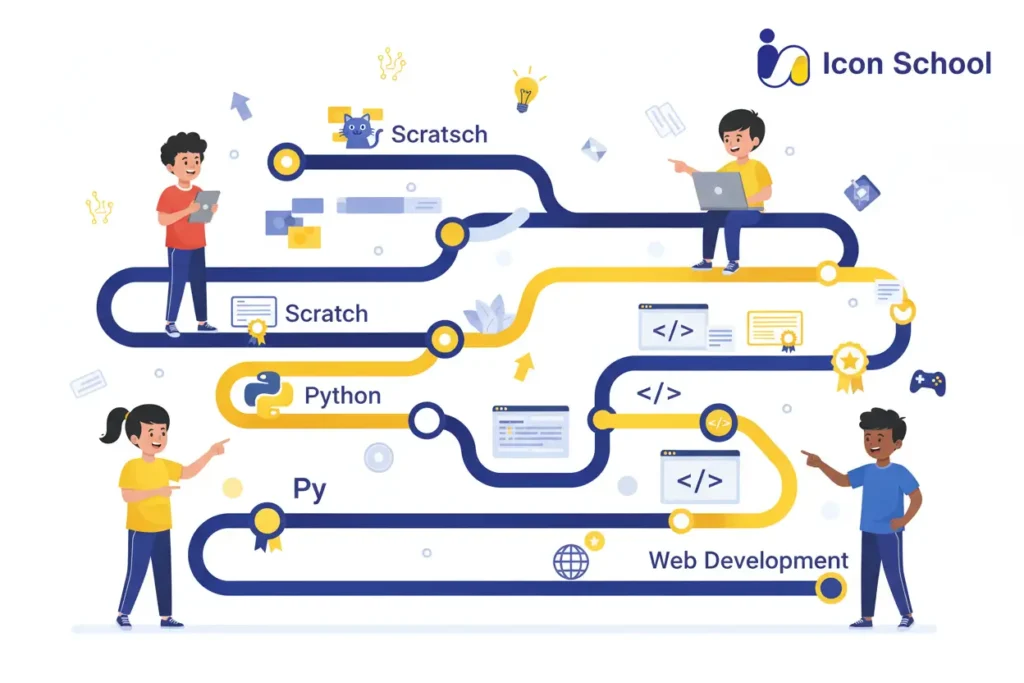
At Icon School, we’ve designed structured pathways that cater to different ages, interests, and skill levels so you can confidently choose the route that matches your child’s current stage and aspirations.
Visual Programming Pathways for Beginners (Scratch and Beyond)
For children just starting out, the visual programming pathway strips away complex syntax and replaces it with intuitive drag-and-drop blocks ideal for building confidence and fundamental logic.
- Beginners (ages 6-10) start with platforms like Scratch, App Inventor, or PictoBlox, learning core concepts of sequence, loops, and conditionals in a playful environment.
- The focus is on learning programming for kids Arabic style, meaning the interface, the explanations, or teacher guidance are adapted to Arabic-speaking children, lowering the language barrier.
- Projects involve games, animations, or interactive stories, so children see tangible results, making it “creation” rather than mere consumption.
- This path develops computational thinking and familiarity with code logic, which means when your child moves to text-based languages later, the transition becomes smoother.
- Regular assignments and instructor support ensure that progress is tracked and gaps are addressed early.
Text Programming Pathways for Intermediates (Python and Web Development)
Once your child has mastered the basics and shows curiosity to do more, the text-programming path opens up a world of real coding and real-world tech.
- Around ages 10–14 (or when comfortable with visual coding), children move into languages like Python, HTML, CSS, and JavaScript, offering them hands-on exposure to “professional programming.”
- Python is emphasized as a powerful yet readable language, ideal for young learners ready to write actual code, that engenders logical precision and advanced problem-solving.
- Web development (HTML, CSS, JavaScript) gives children immediate, visible results: websites, interactive interfaces reinforcing the value of their skills in the real digital world.
- At this stage, the curriculum supports Arabic-friendly instruction, enabling children to thrive even if English coding terms are new.
- Icon School offers structured levels, projects, and milestones, helping children build a portfolio of work, a key differentiator in kids programming education paths.
Why Icon School Is the Optimal Choice for Arab Families
When you’re looking for the best place to begin your child’s journey in programming for kids Arabic, the right environment makes all the difference.
- It offers a fully dedicated Arabic-friendly platform: from live instructors to Arabic explanations and curricula that respect the cultural context of Arab families.
- The learning experience combines fun and structure: every few weeks students complete a real project, helping them feel ownership of their work, not just passive learners.
- Flexibility in delivery: whether online or onsite in Egypt, the school accommodates the busy schedules of families and adapts to different learning preferences.
- Transparent progress tracking: parents receive dashboards or reports showing attendance, assignments, and project completion that keeps you informed and involved.
- A clear progression roadmap: from beginner to advanced levels, children are continuously challenged without feeling overwhelmed; this ensures retention and growth.
- Community and peer engagement: being surrounded by Arab-speaking peers and instructors fosters confidence and broader social motivation.
Frequently Asked Questions About Programming for Kids in Arabic
Does my child need a powerful computer to learn programming?
No, children don’t need high-end devices to start coding. Beginner-friendly platforms run smoothly on basic laptops or tablets, and consistent practice matters far more than specifications.
How long does my child need to master programming?
The timeline varies by age and engagement. With regular, structured learning, most children can start creating real projects within a few months, steadily building strong coding foundations.
Is programming suitable for all children or only those gifted in math?
Programming benefits every child, not just math enthusiasts, It develops logical thinking, creativity, and problem-solving skills that apply across academic and everyday challenges.
What’s the difference between free and paid courses?
Free courses give initial exposure but often lack guidance and progression. Paid programs provide structured paths, feedback, and hands-on projects that turn curiosity into practical coding skills.
How do I know my child is progressing in their educational journey?
Progress can be tracked through completed projects, interactive exercises, and regular assessments. Visible achievements, like games or websites they build, are a clear indicator of learning growth.
Every great future begins with a single step, and your child’s step starts here. By learning programming for kids in Arabic through Icon School, your child will gain logical thinking, creativity, and digital confidence that lasts a lifetime, so don’t wait for tomorrow’s opportunities enroll your child today and watch them turn imagination into innovation with every line of code.